3M Skin and Nasal Antiseptic

Why choose Skin and Nasal Antiseptic?
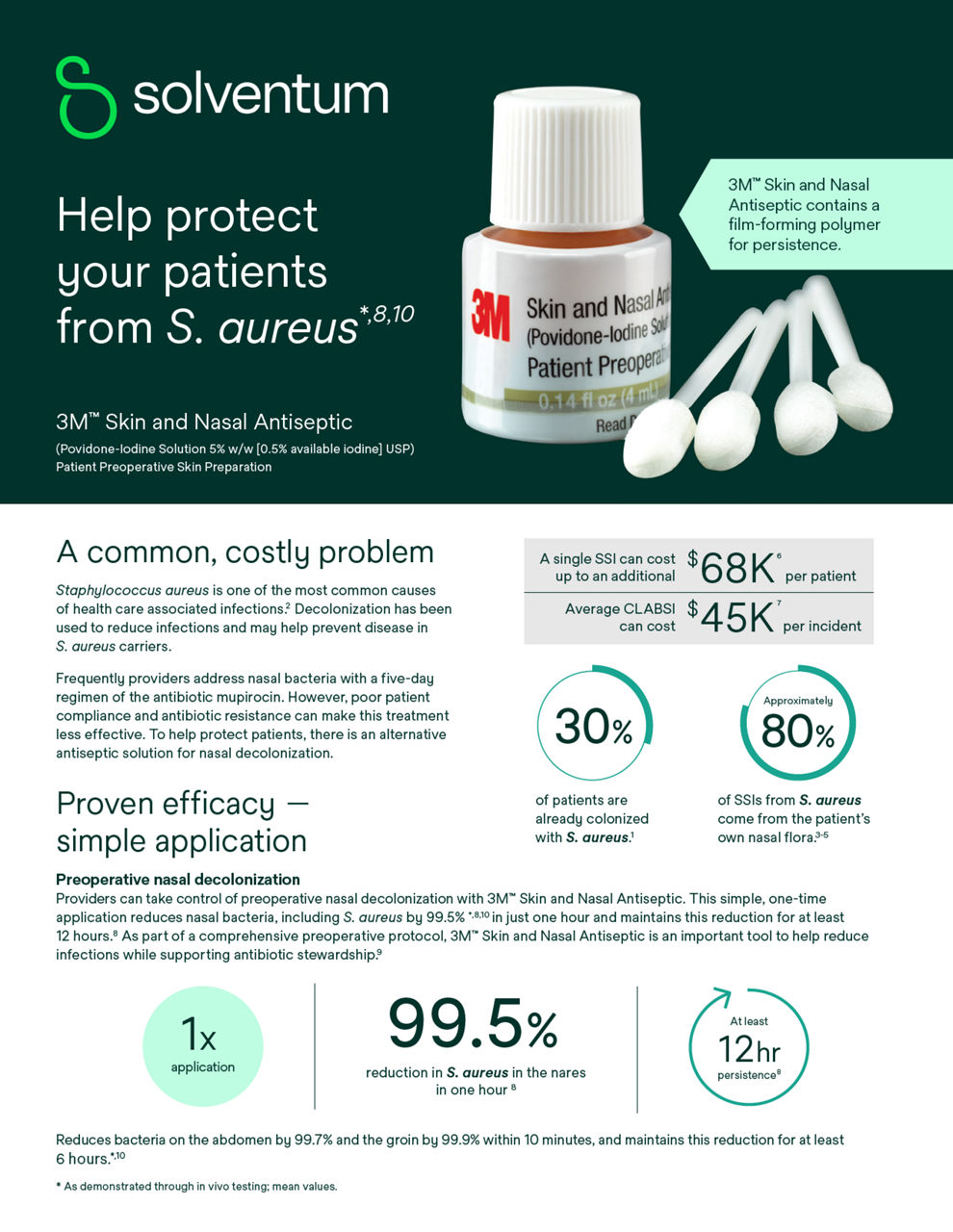
Your patients are counting on you - be sure you're doing everything you can to help prevent surgical site infections (SSIs). With a simple one-time application,8 you'll be able to reduce bacterial counts in the nares, including Staphylococcus aureus.1 Get it right the first time, every time with 3M™ Skin and Nasal Antiseptic.
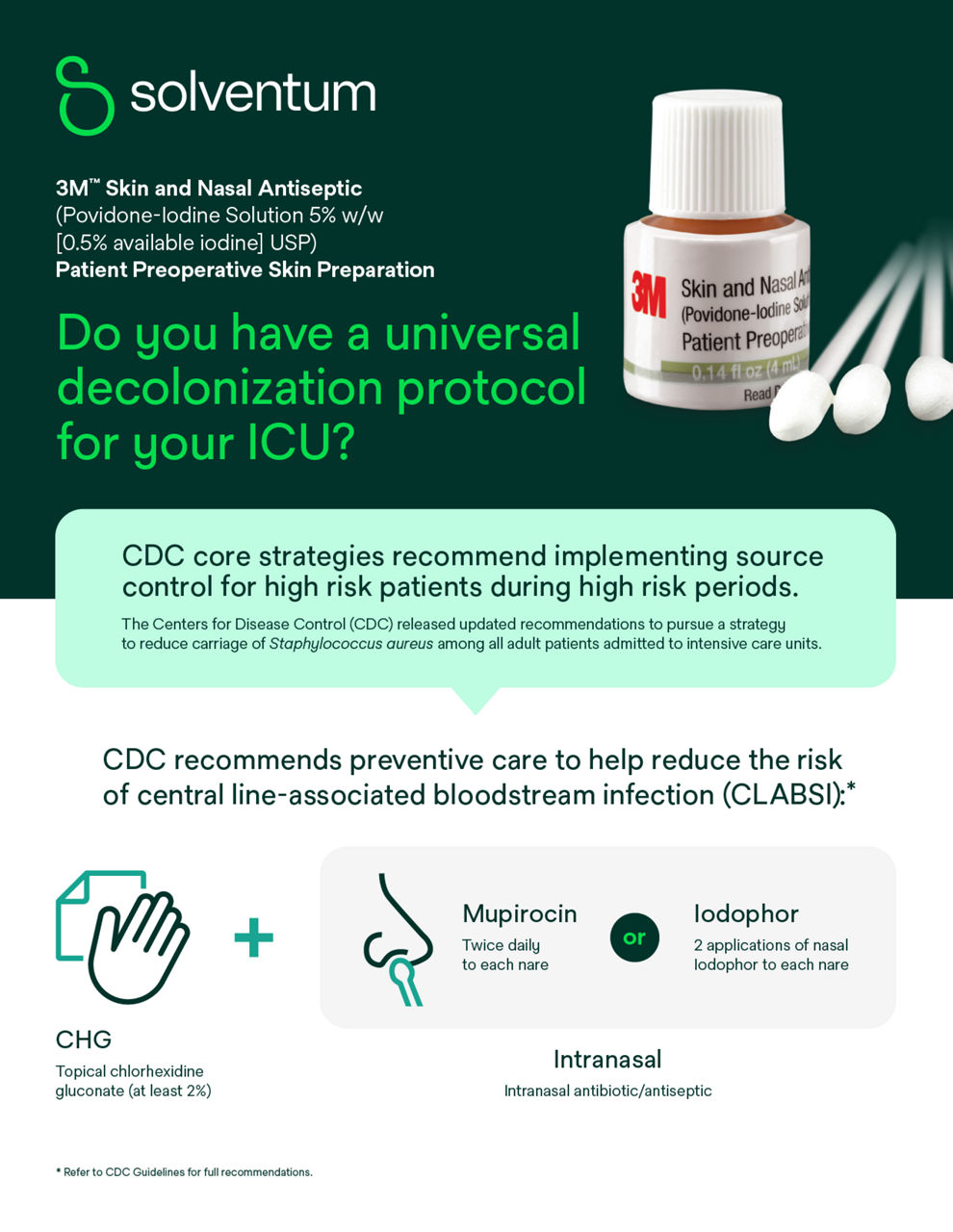
Enhance patient safety in the ICU and the OR

Make Skin and Nasal Antiseptic part of your nasal decolonization protocol
Confidence in surgery matters. Take control of your patients’ nasal decolonization with Skin and Nasal Antiseptic.
Designed to help address the rising concern of SSIs that can be caused by bacteria in the nares, this solution is a key element of patient preoperative skin preparation. By reducing the risk factors that contribute to SSIs, you can make a significant impact on patient outcomes. Using Skin and Nasal Antiseptic reduces bacteria in the nares, including Staphylococcus aureus, which is the leading cause of SSIs among adult and pediatric patients. By aligning with CDC, SHEA, IDSA, APIC and other leading organizations, you can help prevent SSIs.
We share your passion for infection prevention. Let us help you protect every patient, every time.
Proven efficacy. Simple application
Make a real difference in your presurgical infection prevention protocol with Skin and Nasal Antiseptic (Povidone-Iodine Solution 5% w/w [0.5% available iodine] USP) Patient Preoperative Skin Preparation. Designed to prepare the skin prior to surgery and help reduce bacteria that potentially can cause skin infection.

When it comes to nasal antiseptics, formulation matters
Not all nasal decolonization solutions are created equally. 3M™ Skin and Nasal Antiseptic includes a unique polymer for longer efficacy.
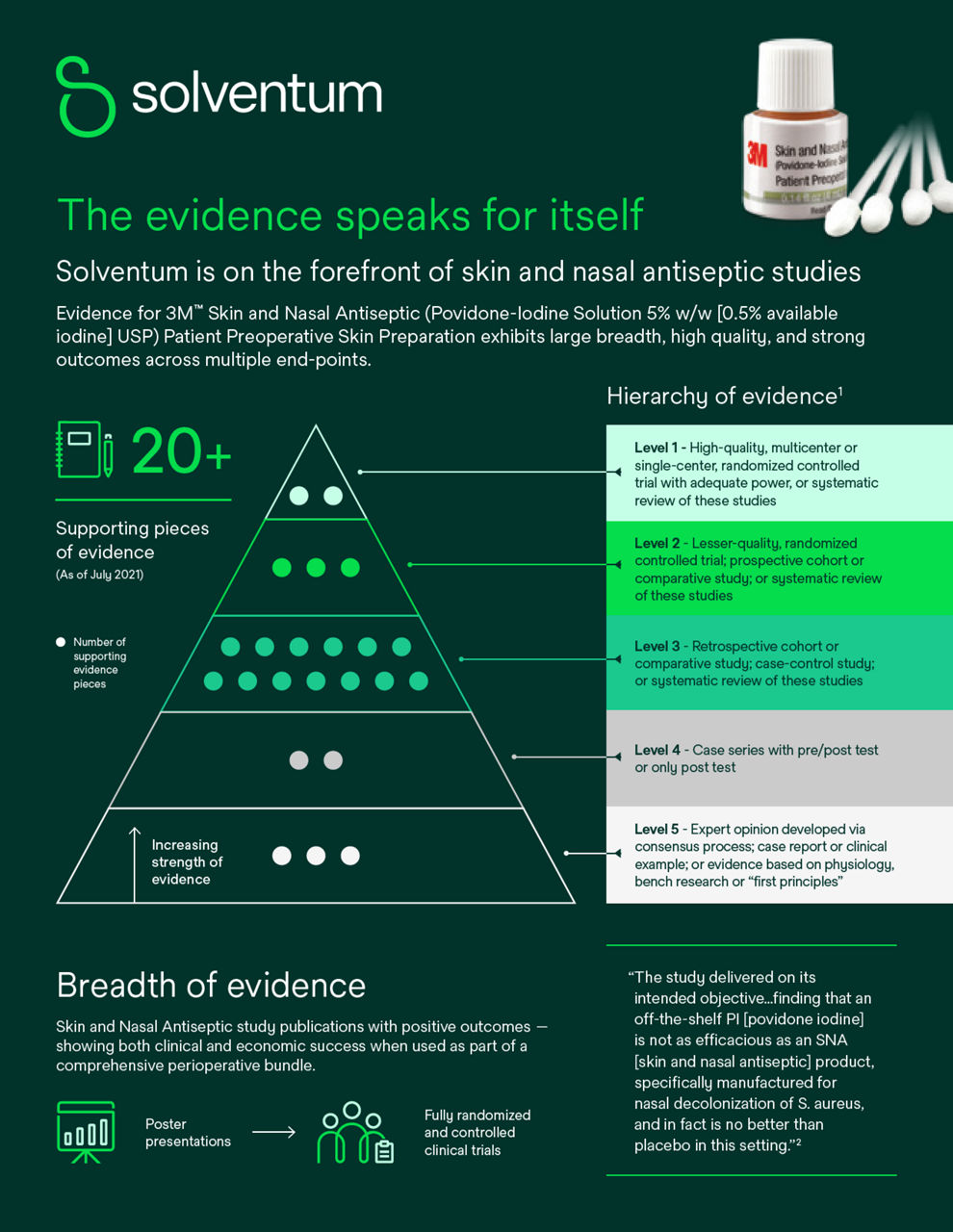
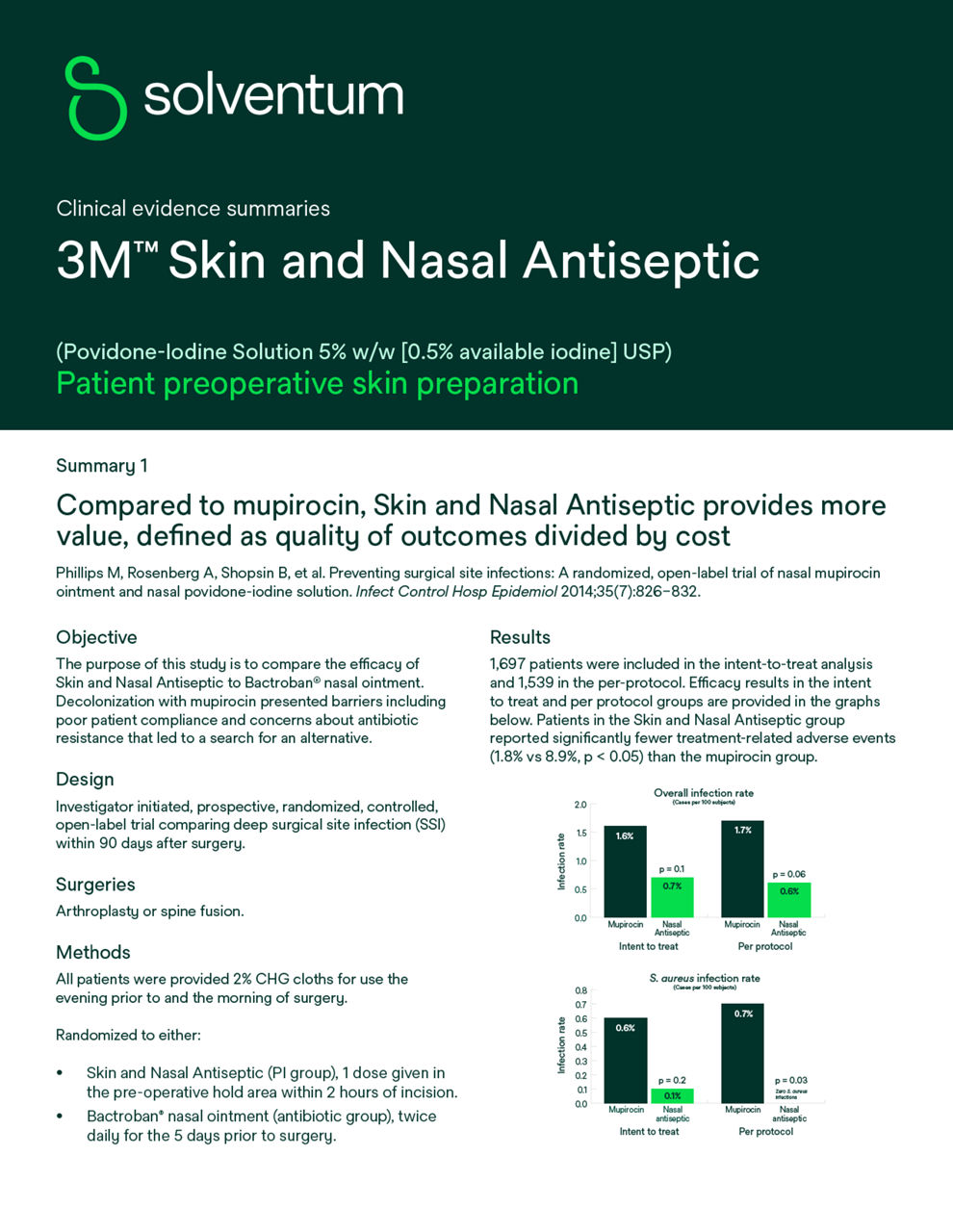
Proven performance

Resources

References:
- 3M study 05-011100
- 3M study 05-010945
- Phillips M, Rosenburg A, Shopsin B, et al. Preventing surgical site infections; A randomized, open-label trial of nasal mupirocin ointment and nasal povidone-iodine solution. Infect Control Hosp Epidemiol.2014;35:826-832.
- (Ex vivo porcine model): Anderson M, et al. 2015. Efficacy of Skin and Nasal Povidone-Iodine Preparation against mupirocin resistant MRSA and Staphylococcus aureus with the anterior nares, Antimicrob Agents Chemother. 2015 May;59(5):2765-73 pii: AAC.04624-14
- Bebko SP, Green DM, Awad SS. Effect of a preoperative decontamination protocol on surgical site infections in patients undergoing elective orthopedic surgery with hardware implantation. JAMA Surg. Published online March 04, 2015.doi:10.1001/jamasurg.2014.3480.
- Urias DS, Varghese M, Simunich T, Morrissey S, Dumire R. Preoperative decolonization to reduce infections in urgent lower extremity repairs. European Journal of Trauma and Emergency Surgery. 2018:17. doi:10.1007/s00068-017-0896-1.
- Loftus RW, Dexter F, Goodheart MJ, et al. The Effect of Improving Basic Preventive Measures in the Perioperative Area on Staphylococcus aureus Transmission and Surgical Site Infections: A Randomized Clinical Trial. JAMA Netw Open.2020; 3(3):e201934. doi:10.1001/jamanetworkopen.2020.1934.
- Solventum internal data on file.
- Premier Market Insights, Premier Inc. 2025. Data on file. Product cost-in-use per staffed bed. Based on ERP or transactional data from acute care facilities representing 25% of the entire U.S. acute care segment, data pulled 12/1/2024-12/31/2025.
- Torres EG, Lindmair-Snell JM, Langan JW, Burnikel BG. Is preoperative nasal povidone-iodine as efficient and cost-effective as standard methicillin-resistant Staphylococcus aureus screening protocol in total joint arthroplasty? J Arthroplasty. 2016; 31:215218.