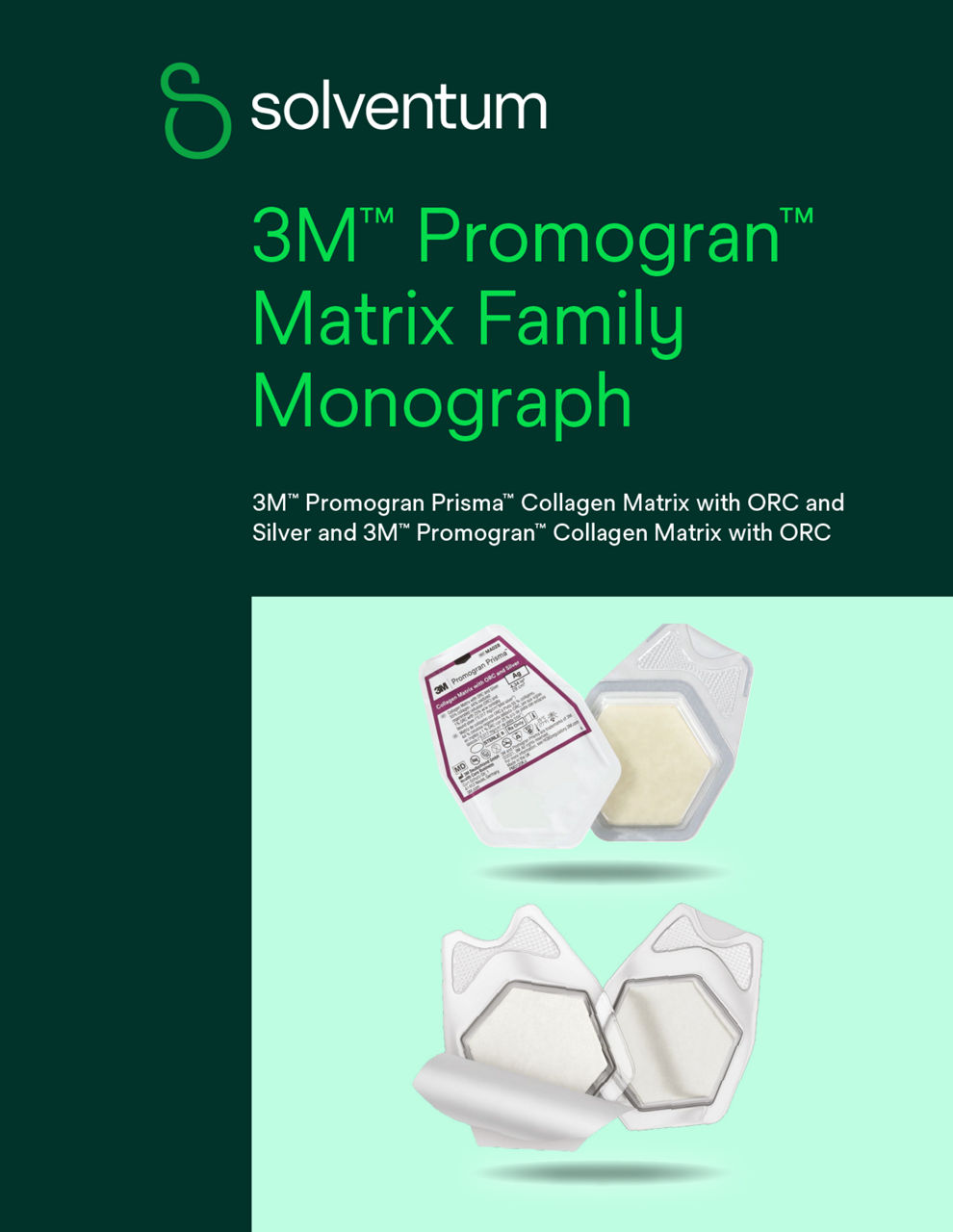
3M Promogran Prisma Collagen Matrix with ORC and Silver

Treat early, don't wait

Early treatment of wounds with Promogran Prisma Matrix and Promogran Matrix dressings may help improve healing rates versus standard treatments. As wounds age, the likelihood of healing or improvement decreases.1 Don’t wait for a wound to stall. Help your patients get back to living their lives sooner. Wounds treated early have higher rates of healing or improvement.2-3
An RCT on DFUs (n=276) showed a trend of healing among DFUs with less than 6 months’ duration when treated with Promogran Matrix Family versus moistened gauze control (45% vs. 33%, p=0.056).3
A prospective randomized multi-center study of Venous Leg Ulcers (VLUs) (n=56) showed a significant correlation between ulcer duration and healing using a multivariate analysis (p=0.004).2
While MMPs are the most commonly discussed, elastase is one of the most abundant proteases present in chronic wounds, the first of the proteases to arrive post-injury, and is responsible for damage to:4-6
- Fibronectin – Vital for cell adhesion and migration; must be present to signal growth factors to appear
- Elastin – Gives tissue elasticity
- Growth factors – Platelet-Derived Growth Factor (PDGF) and Epidermal Growth Factor (EGF)
Promogran Matrix Family: Proven Outcomes
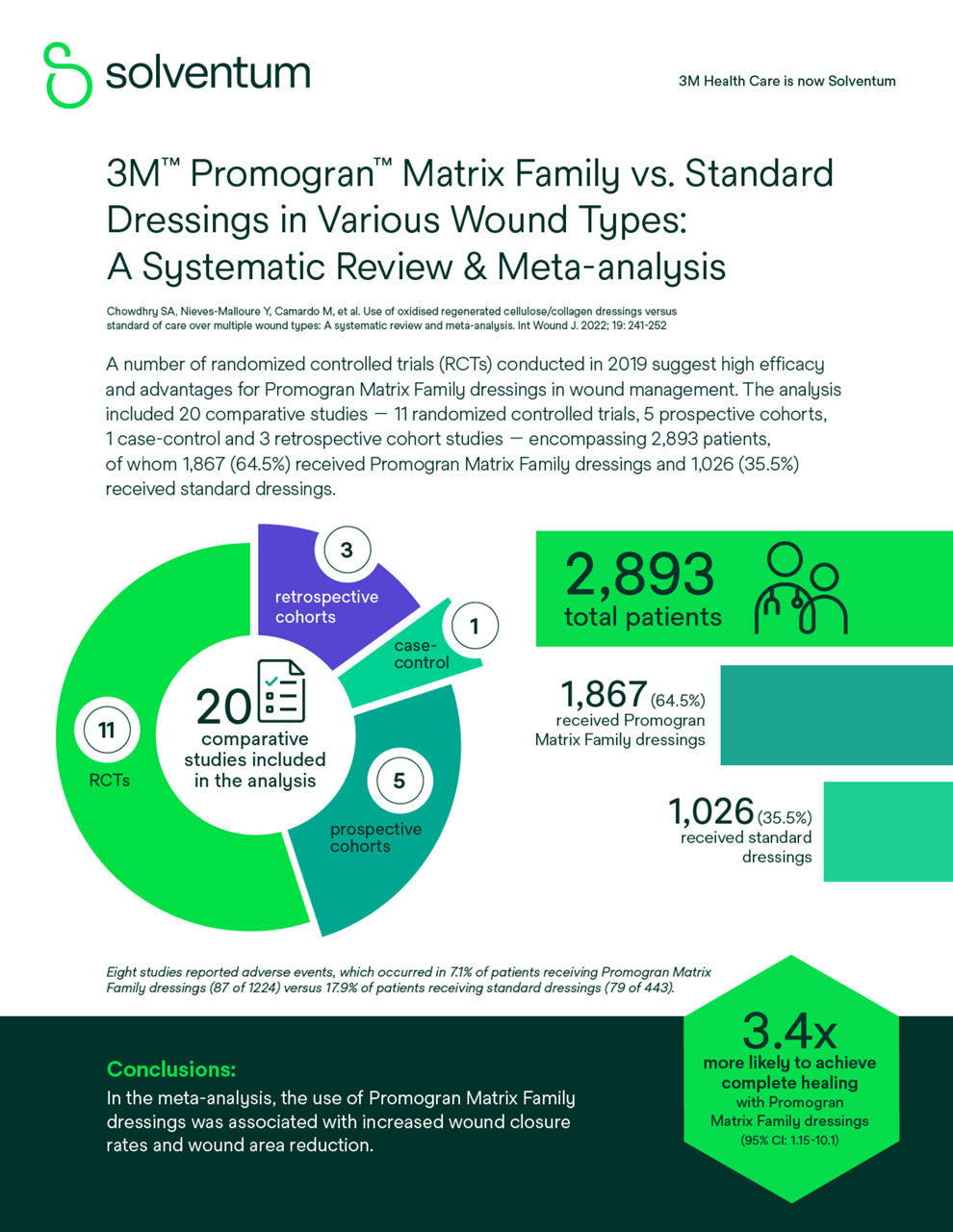
A meta-analysis showed that wounds treated with collagen/ORC dressings were 3.4x more likely to close compared to standard dressings (n=2,447).1
Cost effective7*
Using Promogran Matrix Family dressings is cost effective and has the potential to lower the total cost of treatment due to reduced nursing time and improved healing rates.*
Increased number of wounds closed1
A systematic review of 20 clinical studies (n=2893) showed wounds treated using Promogran Matrix Family dressings can significantly increase the number of wounds closed.1
Fewer withdrawals due to infection8
An RCT showed fewer withdrawals because of infection with Promogran Prisma Matrix.8
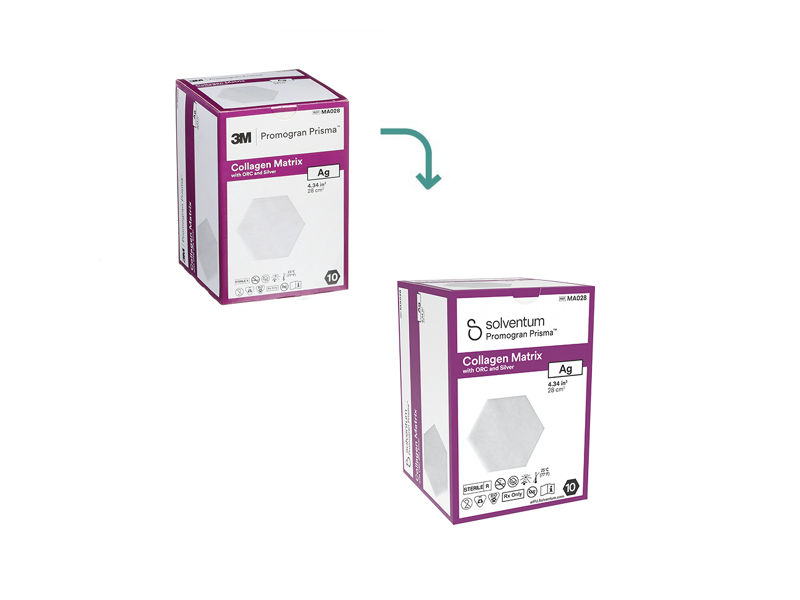
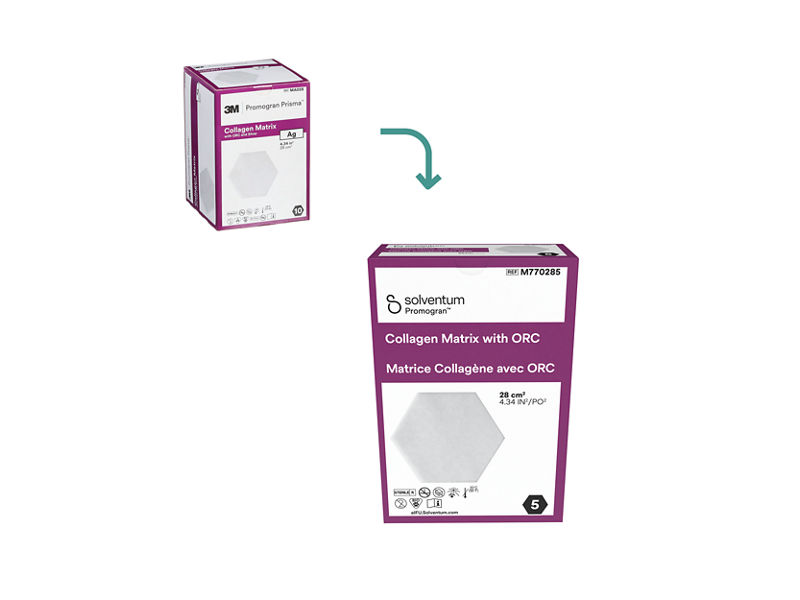
Promogran Matrix Family Application Video
Find detailed, step-by-step guidance on how to apply Promogran Matrix and Promogran Prisma Matrix dressings for the management of certain hard-to-heal wounds.
3M Promogran Prisma Collagen Matrix with ORC and Silver
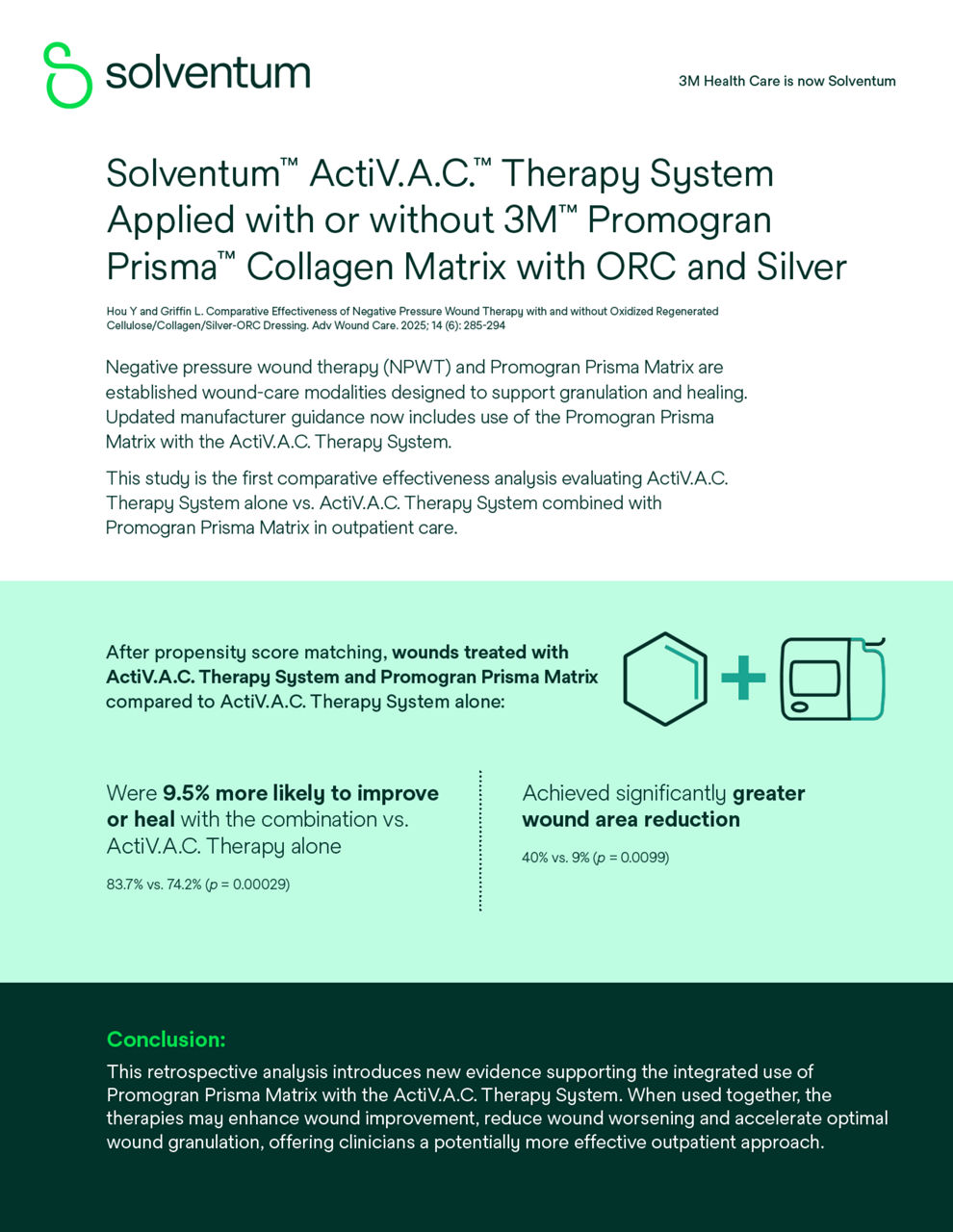
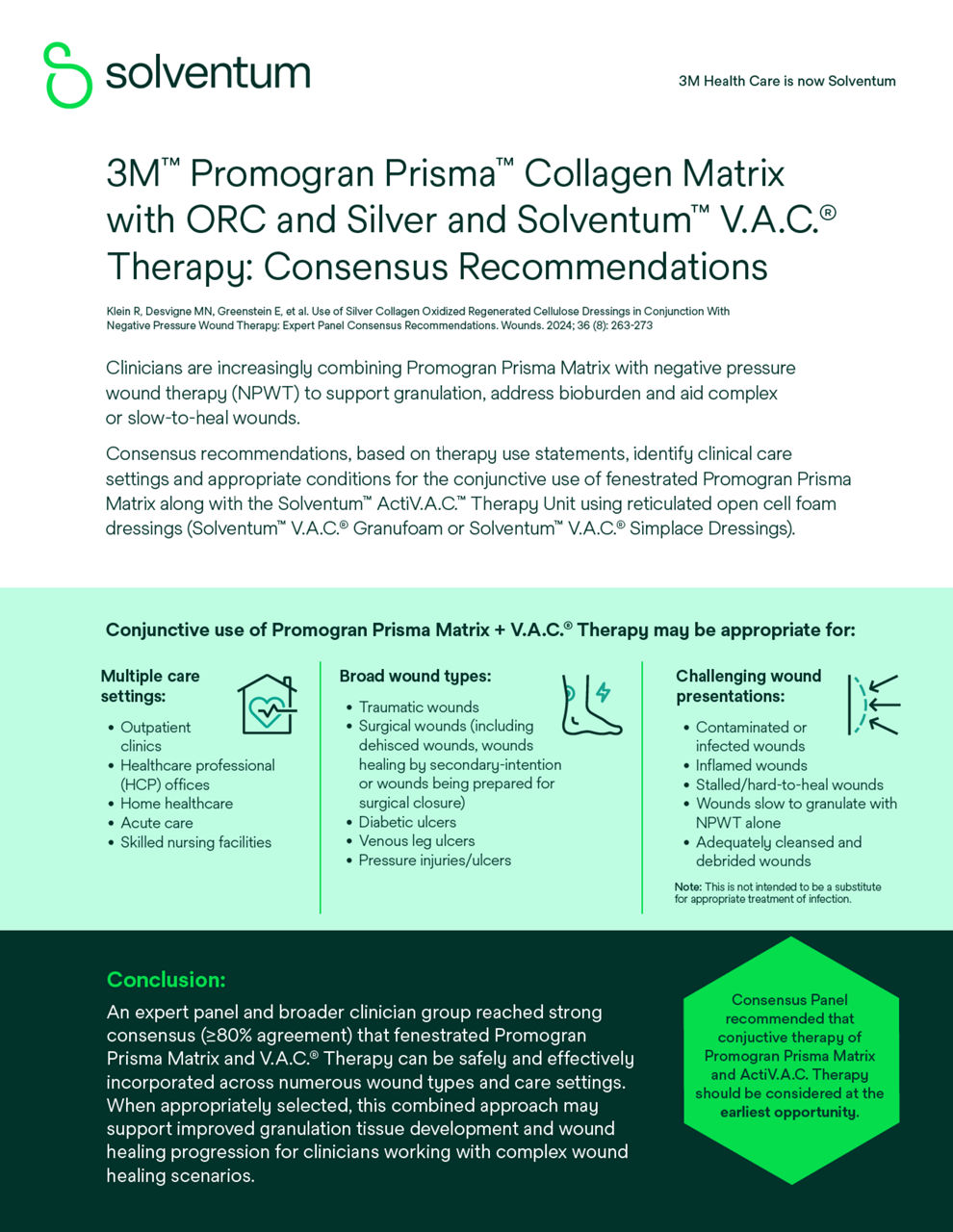
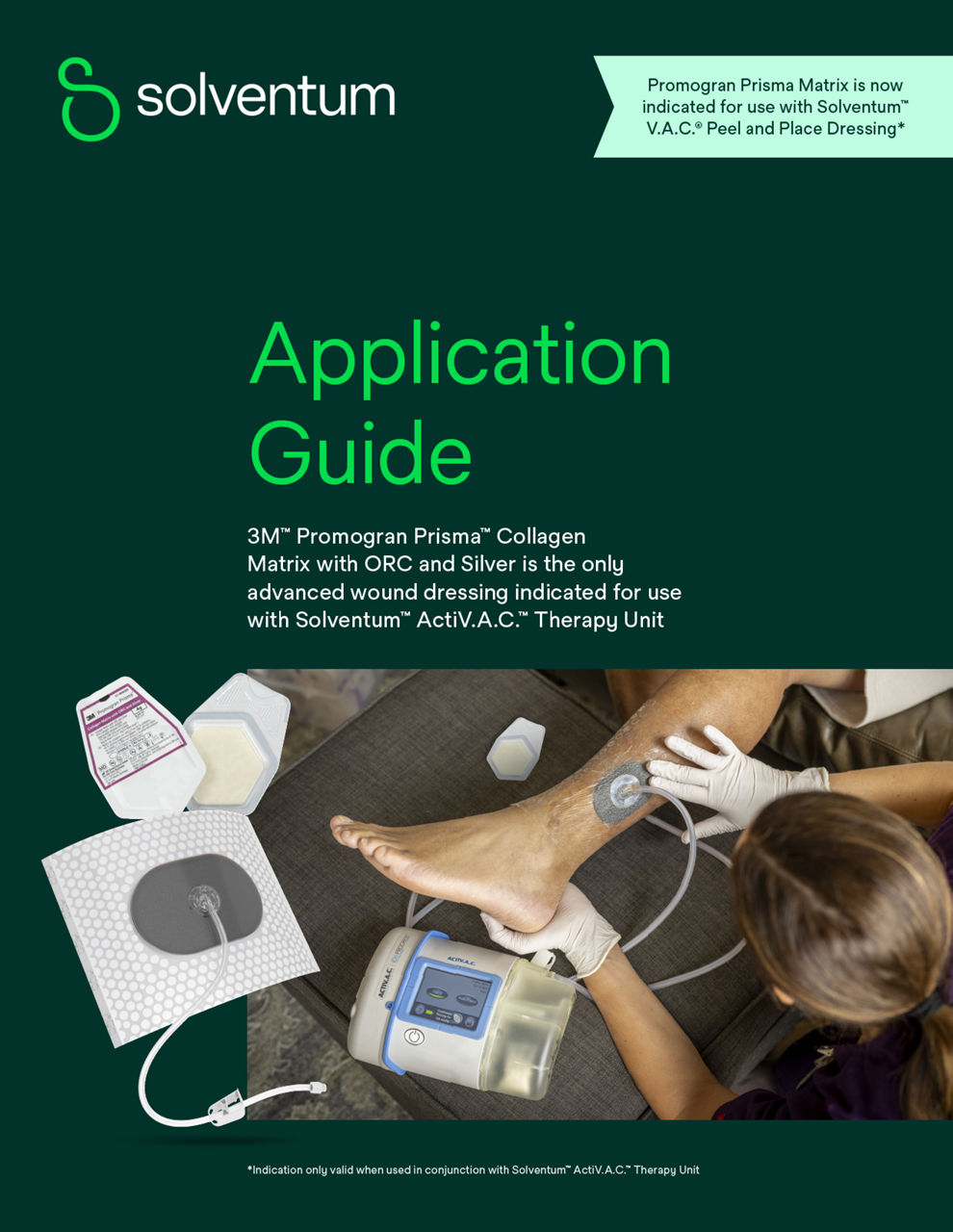
The 3M™ Promogran Matrix Family of collagen dressings, with their unique ORC formulation, is clinically proven to enhance healing and is labeled for use with 3M™ ActiV.A.C.™ Therapy.
Clinical evidence that inspires confidence
Explore resources




Explore more
- Chowdhry, Saeed A., Yeni Nieves-Malloure, Mark Camardo, Julie M. Robertson, and Joshua Keys. “Use of oxidised regenerated cellulose/collagen dressings versus standard of care over multiple wound types: a systematic review and meta-analysis.” International Wound Journal 19, no. (2022): 241-252. 2. Cullen, Breda, Paul W. Watt, Charlotte Lundqvist, Derek Silcock, Richard J. Schmidt, Declan Bogan, and Nicholas D. Light. “The role of oxidised regenerated cellulose/collagen in chronic wound repair and its potential mechanism of action.” The international journal of biochemistry & cell biology 34, no. 12 (2002): 1544-1556.
- Cullen, Breda, Molly Gibson, and Lorraine Nisbet. “Early adoption of collagen/ORC therapies improves clinical outcome.” Wound Repair and Regeneration 20, no. 5 (2012): A92.
- Veves, Aristidis, Peter Sheehan, and Hau T. Pham. “A randomized, controlled trial of Promogran (a collagen/oxidized regenerated cellulose dressing) vs standard treatment in the management of diabetic foot ulcers.” Archives of surgery 137, no. 7 (2002): 822-827.
- Gibson, D., B. Cullen, R. Legerstee, K. G. Harding, and G. Schultz. MMPs Made Easy. Wounds International 1 (1): 1–6. 2009.
- Weitz, J. I., S. L. Landman, K. A. Crowley, S. Birken, and F. J. Morgan. “Development of an assay for in vivo human neutrophil elastase activity Increased elastase activity in patients with alpha 1-proteinase inhibitor deficiency.” The Journal of clinical investigation 78, no. 1 (1986): 155- 162. doi:10.1172/JCI112545. Cited by: Ferreira, Ana V., Ilana Perelshtein, Nina Perkas, Aharon Gedanken, Joana Cunha, and Artur Cavaco-Paulo. “Detection of human neutrophil elastase (HNE) on wound dressings as marker of inflammation.” Applied microbiology and biotechnology 101, no. 4 (2017): 1443-1454.
- Hasmann, Andrea, Ulrike Gewessler, Elisabeth Hulla, Konstantin P. Schneider, Barbara Binder, Antonio Francesko, Tzanko Tzanov et al. “Sensor materials for the detection of human neutrophil elastase and cathepsin G activity in wound fluid.” Experimental dermatology 20, no. 6 (2011): 508-513.
- Snyder, Robert J., Deborah Richter, and Mary Ellen Hill. “A retrospective study of sequential therapy with advanced wound care products versus saline gauze dressings: comparing healing and cost.” Ostomy wound management 56, no. 11A (2010): 9-15.
- Gottrup, Finn, Breda Mary Cullen, Tonny Karlsmark, Morten Bischoff-Mikkelsen, Lorraine Nisbet, and Molly Camilla Gibson. “Randomized controlled trial on collagen/oxidized regenerated cellulose/silver treatment.” Wound Repair and Regeneration 21, no. 2 (2013): 216-225.