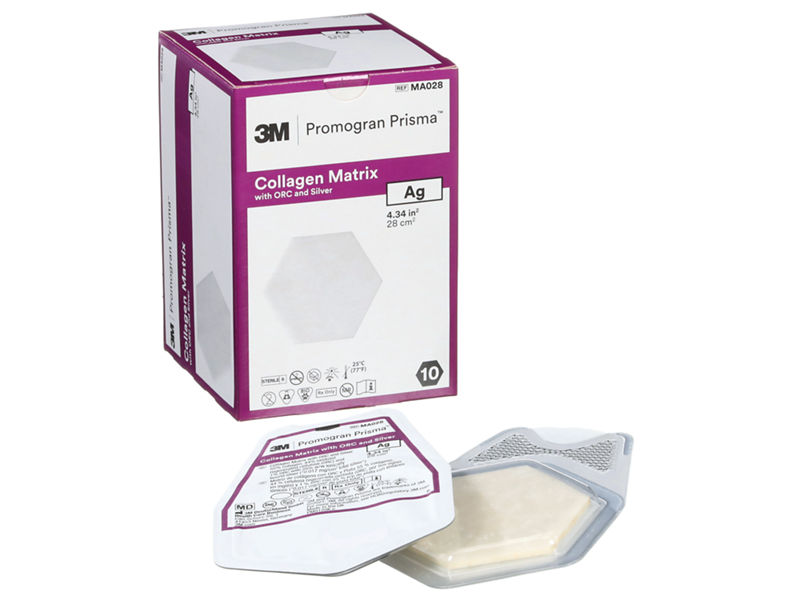
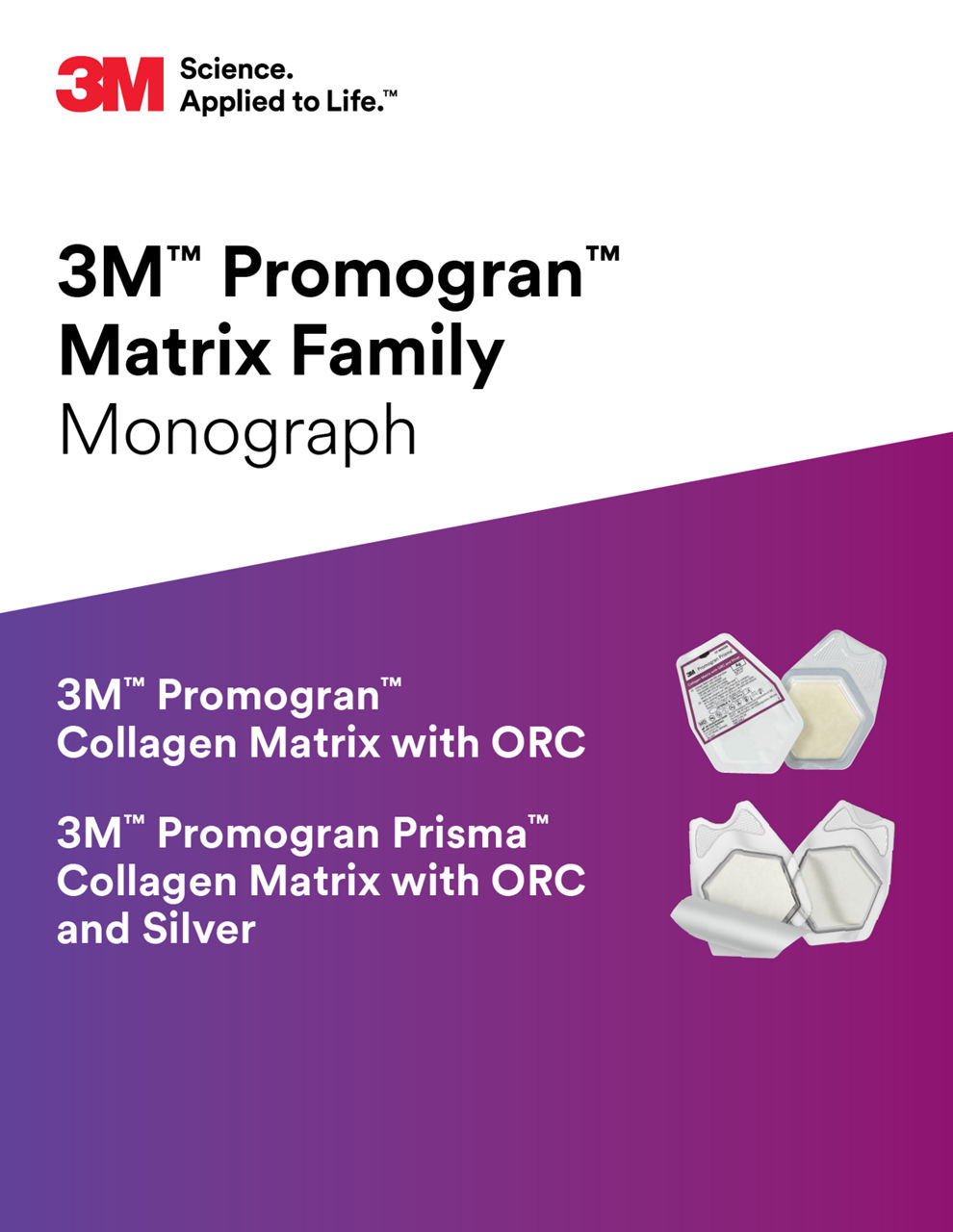
3M Promogran Prisma Collagen Matrix with ORC and Silver

Foundations for healing

Creating the right conditions for healing is crucial, especially for hard-to-heal wounds. Addressing inflammation and bioburden is an important step. While collagen is effective against matrix metalloproteinases (MMPs), its impact on elastase, another abundant protease, is limited. In vitro studies show that combining Oxidized Regenerated Cellulose (ORC) with collagen has a greater effect than collagen alone in reducing both MMP and elastase activity, both highly predictive indicators of non-healing wounds.2-3
Elastase plays a critical role as it's one of the most prevalent proteases in hard-to-heal wounds. It arrives early post-injury, and can damage crucial elements including4-6:
- Fibronectin: Which aids cell adhesion and migration
- Elastin: Which provides tissue elasticity
- Growth factors: PDGF and EGF
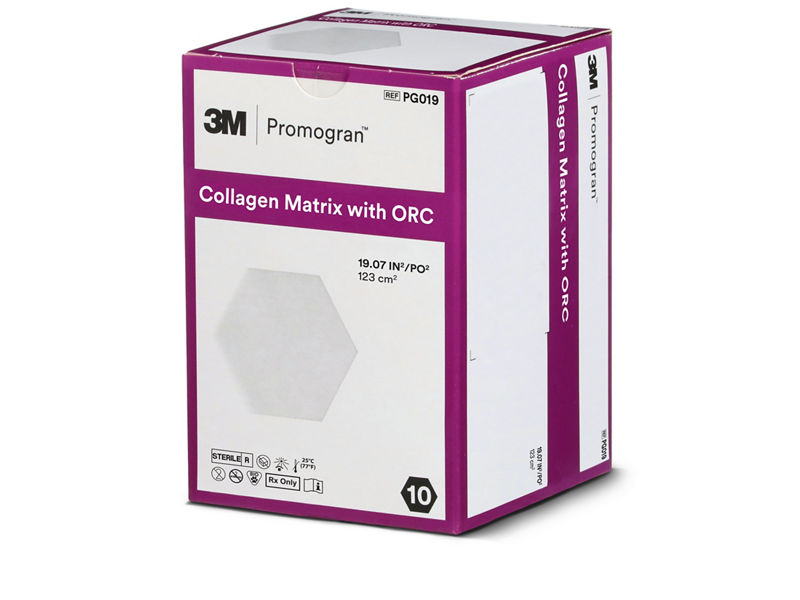
3M Promogran Matrix Family: Proven outcomes
Enhancing patient outcomes is at the heart of our wound care approach, and the 3M™ Promogran™ Matrix Family stands out.
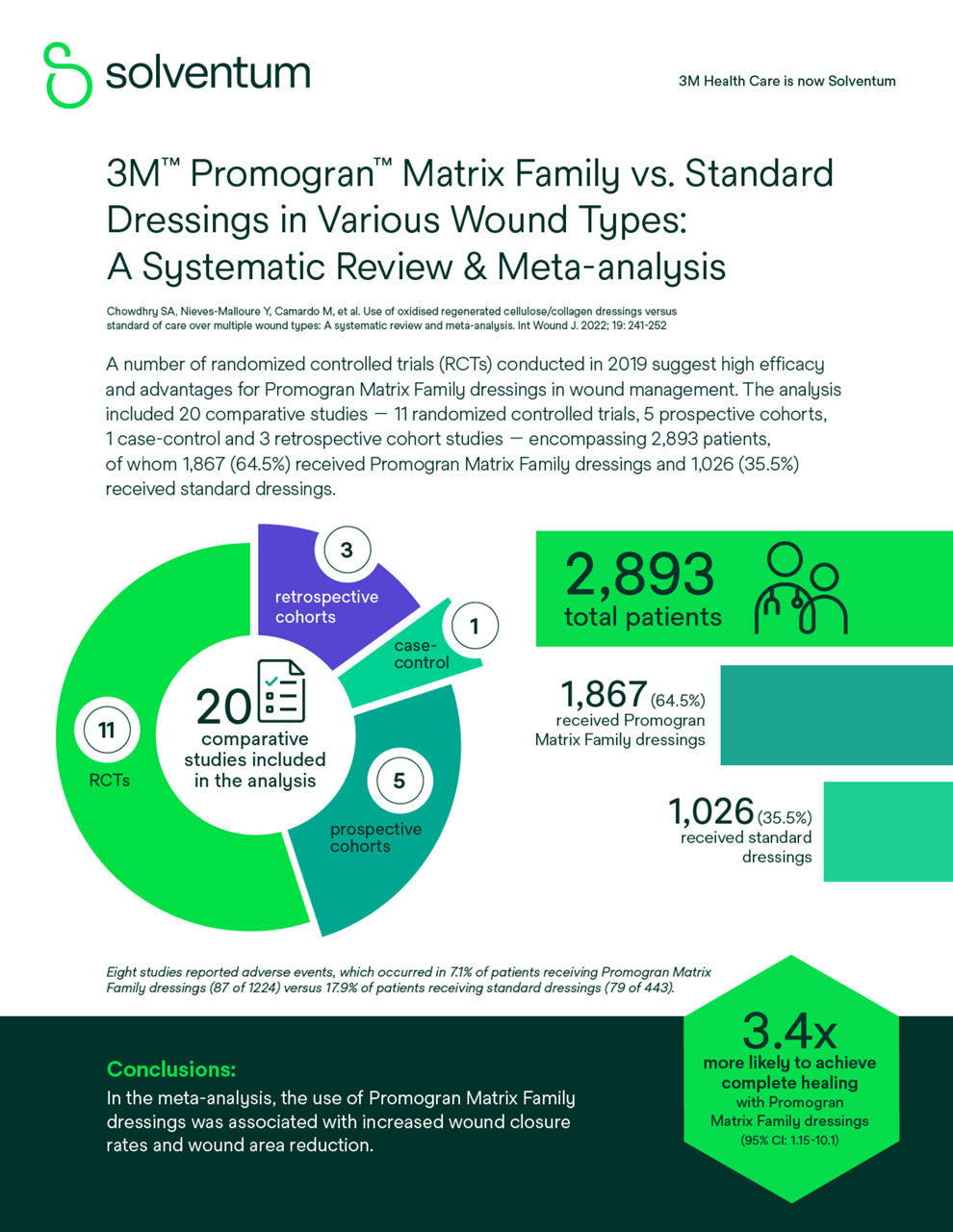
- 3.4x higher odds to achieve complete wound closure1
- Proven effective in clinical studies and Randomized Controlled Trials (RCT)1
- Improves overall success rates when applied early7-10
- Potential to reduce treatment costs11
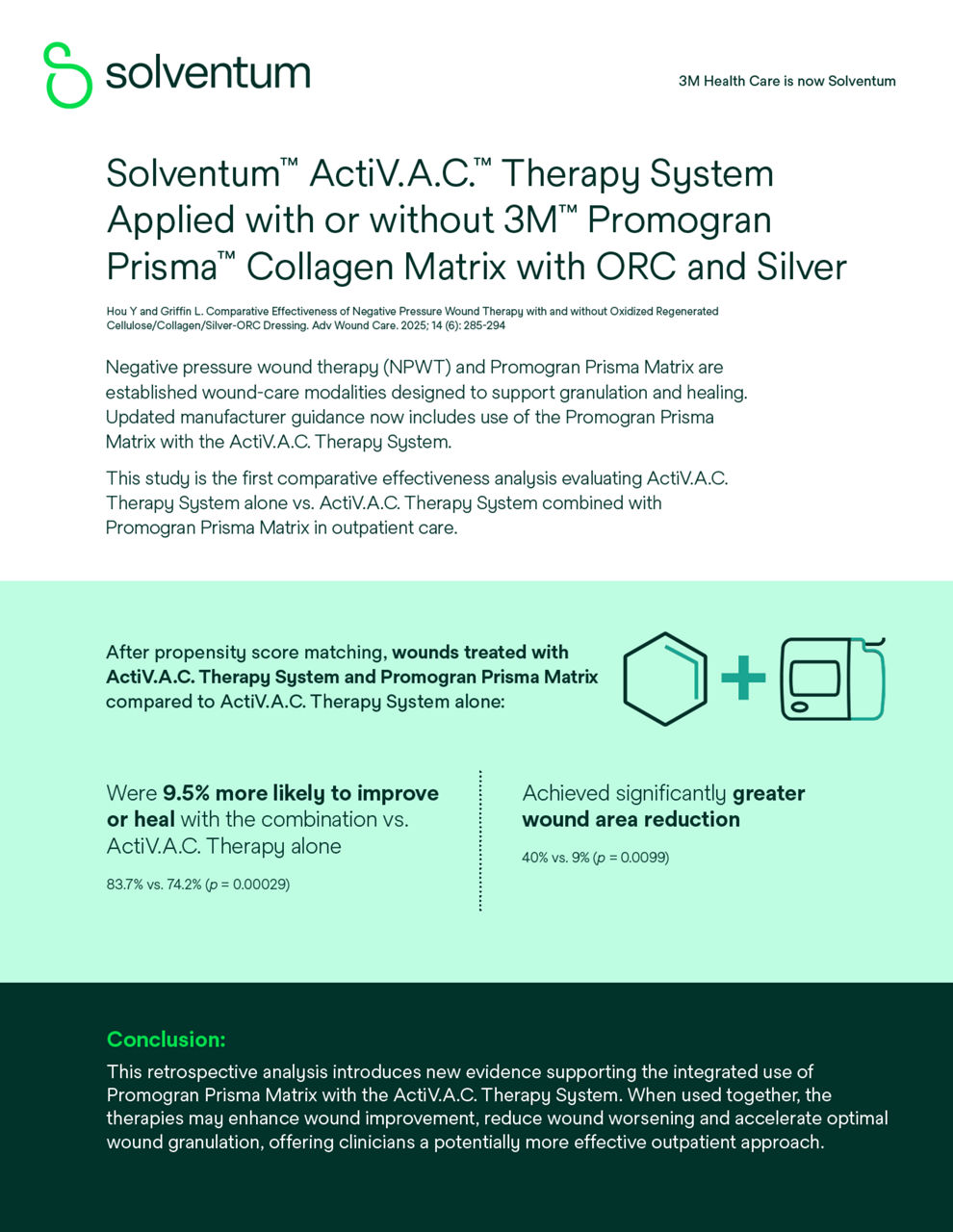
Clinical evidence that inspires confidence
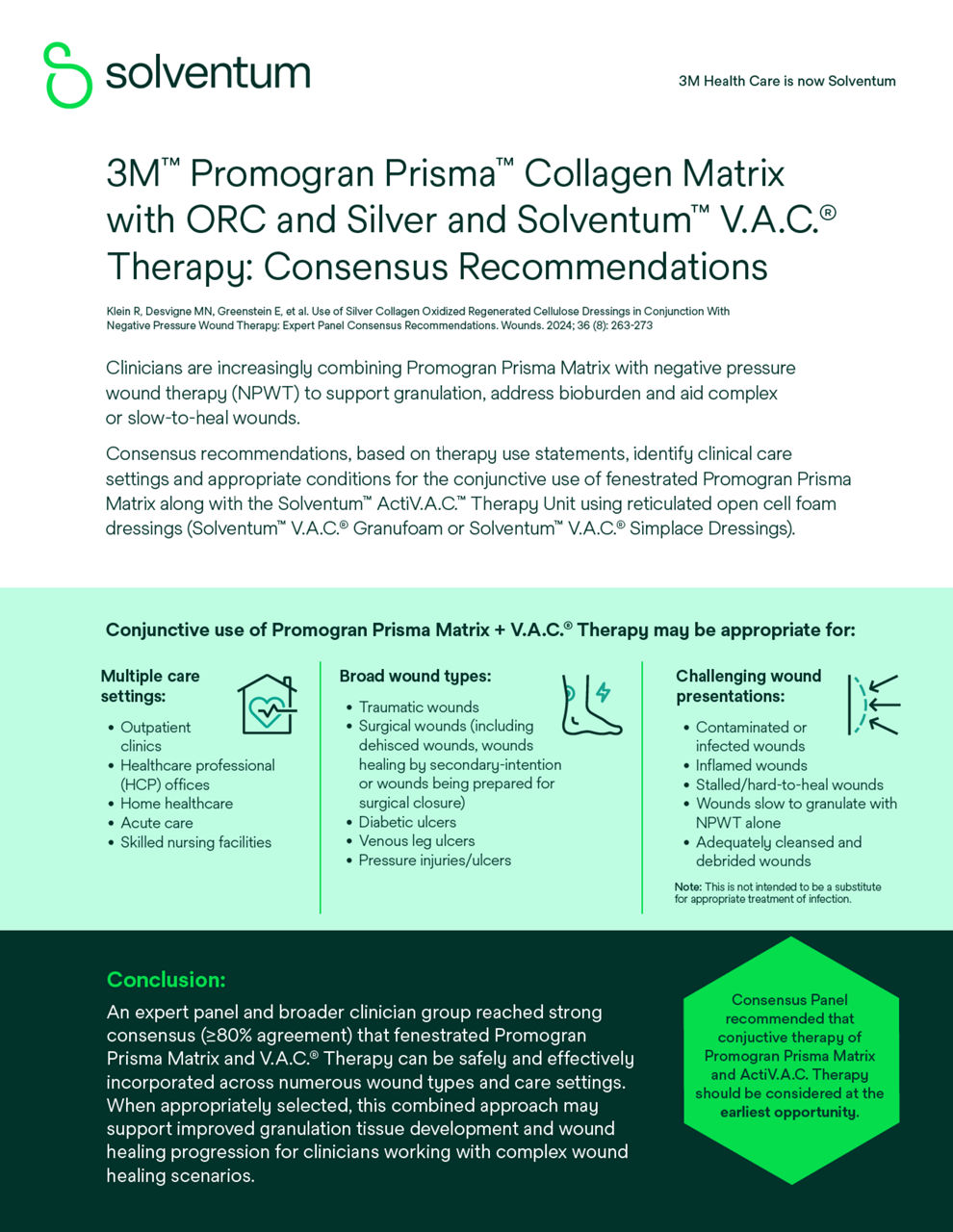
Explore resources


Explore more
References
- Chowdhry, Saeed A., Yeni Nieves‐Malloure, Mark Camardo, Julie M. Robertson, and Joshua Keys. "Use of oxidised regenerated cellulose/collagen dressings versus standard of care over multiple wound types: a systematic review and meta‐analysis." International Wound Journal 19, no. 2 (2022): 241-252.
- Cullen, Breda, Paul W. Watt, Charlotte Lundqvist, Derek Silcock, Richard J. Schmidt, Declan Bogan, and Nicholas D. Light. "The role of oxidised regenerated cellulose/collagen in chronic wound repair and its potential mechanism of action." The international journal of biochemistry & cell biology 34, no. 12 (2002): 1544-1556.
- Serena, Thomas E., Breda M. Cullen, Simon W. Bayliff, Molly C. Gibson, Marissa J. Carter, Lingyun Chen, Raphael A. Yaakov et al. "Defining a new diagnostic assessment parameter for wound care: elevated protease activity, an indicator of nonhealing, for targeted protease‐modulating treatment." Wound Repair and Regeneration 24, no. 3 (2016): 589-595.
- Gibson, D., B. Cullen, R. Legerstee, K. G. Harding, and G. Schultz. MMPs Made Easy. Wounds International 1 (1): 1–6. 2009.
- Weitz, J. I., S. L. Landman, K. A. Crowley, S. Birken, and F. J. Morgan. "Development of an assay for in vivo human neutrophil elastase activity. Increased elastase activity in patients with alpha 1-proteinase inhibitor deficiency." The Journal of clinical investigation 78, no. 1 (1986): 155-162. doi:10.1172/JCI112545. Cited by: Ferreira, Ana V., Ilana Perelshtein, Nina Perkas, Aharon Gedanken, Joana Cunha, and Artur Cavaco-Paulo. "Detection of human neutrophil elastase (HNE) on wound dressings as marker of inflammation." Applied microbiology and biotechnology 101, no. 4 (2017): 1443-1454.
- Hasmann, Andrea, Ulrike Gewessler, Elisabeth Hulla, Konstantin P. Schneider, Barbara Binder, Antonio Francesko, Tzanko Tzanov et al. "Sensor materials for the detection of human neutrophil elastase and cathepsin G activity in wound fluid." Experimental dermatology 20, no. 6 (2011): 508-513. doi: 10.1111/j.1600-0625.2011.01256.x. Cited by: Ferreira, Ana V., Ilana Perelshtein, Nina Perkas, Aharon Gedanken, Joana Cunha, and Artur Cavaco-Paulo. "Detection of human neutrophil elastase (HNE) on wound dressings as marker of inflammation." Applied microbiology and biotechnology 101, no. 4 (2017): 1443-1454.
- Cullen, Breda, Molly Gibson, and Lorraine Nisbet. "Early adoption of collagen/ORC therapies improves clinical outcome." Wound Repair and Regeneration 20, no. 5 (2012): A92.
- Gottrup, Finn, Breda Mary Cullen, Tonny Karlsmark, Morten Bischoff‐Mikkelsen, Lorraine Nisbet, and Molly Camilla Gibson. "Randomized controlled trial on collagen/oxidized regenerated cellulose/silver treatment." Wound Repair and Regeneration 21, no. 2 (2013): 216-225.
- Veves, Aristidis, Peter Sheehan, and Hau T. Pham. "A randomized, controlled trial of Promogran (a collagen/oxidized regenerated cellulose dressing) vs standard treatment in the management of diabetic foot ulcers." Archives of surgery 137, no. 7 (2002): 822-827.
- Vin, F., L. Teot, and S. Meaume. "The healing properties of Promogran in venous leg ulcers." Journal of wound care 11, no. 9 (2002): 335-341.
- Snyder, Robert J., Deborah Richter, and Mary Ellen Hill. "A retrospective study of sequential therapy with advanced wound care products versus saline gauze dressings: comparing healing and cost." Ostomy wound management 56, no. 11A (2010): 9-15.
- Bourdillon, Katie A., Craig P. Delury, and Breda M. Cullen. "Biofilms and delayed healing–an in vitro evaluation of silver‐and iodine‐containing dressings and their effect on bacterial and human cells." International Wound Journal 14, no. 6 (2017): 1066-1075.