Sterile processing and the operating room

Sterile processing is critical to operating room success
Your primary responsibility in the operating room (OR) is performing surgery and caring for patients, but successful outcomes depend on more than clinical skill. Sterilization is a critical link in the chain of care, and confirming sterility assurance is partially your responsibility. Missing or damaged tools don’t just cause frustration. They waste time, increase costs, and disrupt care.
By understanding your role in sterility assurance and partnering effectively with sterile processing department (SPD) teams, you can help keep cases on schedule, reduce risk, and protect patients.

Frequently asked questions: OR and SPD
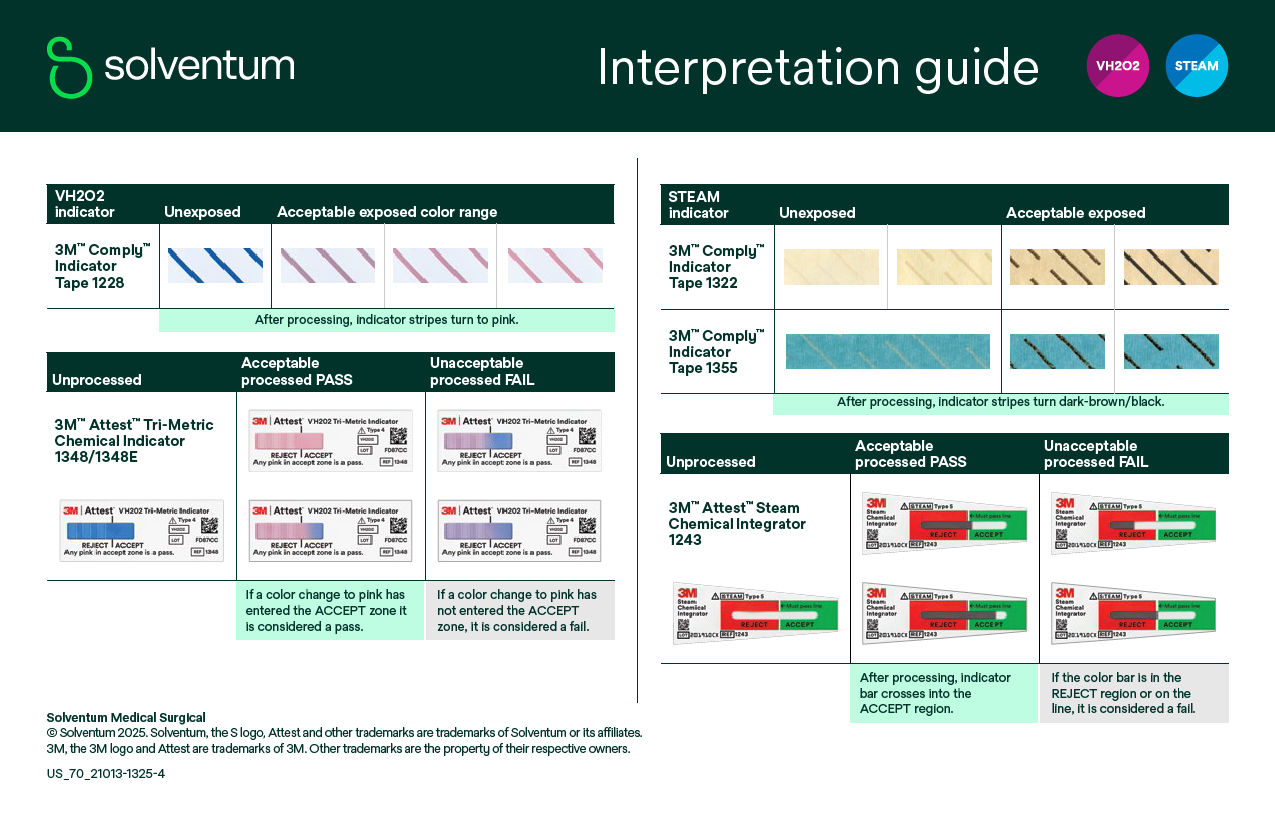
The animations below represent how to interpret Type 5 and Type 4 chemical indicators and external indicator tapes.


If a chemical indicator inside a surgical pack shows a failure, do not use the instruments. A failed CI suggests the sterilization process may not have met required parameters within the pack, putting patient safety at risk. Initiate an investigation following your facility’s policy and industry guidelines.
Chemical indicators are classified into six types by ISO standards, based on their ability to monitor specific sterilization parameters:
- Type 1: Process indicators (e.g. external tapes) confirm exposure to a sterilization process
- Types 2 : For use in special applications (e.g. Bowie-Dick)
- Types 3–6: Placed inside individual load items to assess attainment of the critical process variable(s) at the point of placement
- Learn more about our Type 4 CIs for low-temperature vaporized hydrogen peroxide (VH2O2) sterilization monitoring and Type 5 integrating CIs for steam sterilization monitoring
Not all CIs are created equal. The best choice depends on your application, but indicators that are FDA-cleared and third-party validated provide proven reliability and compliance with global standards. Only Solventum indicators are backed by BSI Kitemark™ certification, proof our products meet rigorous third-party testing and ISO standards, and validated for compatibility with most sterilizer cycles, brands, and models.
Collaboration between the OR and Sterile Processing Department (SPD) is essential for patient safety, efficiency, and schedule integrity. SPD ensures instruments are properly cleaned, sterilized, and ready for use, while OR teams are the last line of defense before instruments are used with patients.
When communication breaks down, or teams are not knowledgeable about sterilization best practices, the result can be missing or damaged tools, surgical delays, increased costs, and disrupted care. Working together helps prevent these issues, improves compliance, and strengthens sterility assurance across the surgical workflow.
Watch our on-demand webinar, “CSSD & OR Speaking the Same Patient Safety Language,” to learn practical strategies for collaboration and reducing risk.