Antimicrobial incise drapes
SSI prevention is possible with antimicrobial incise drapes
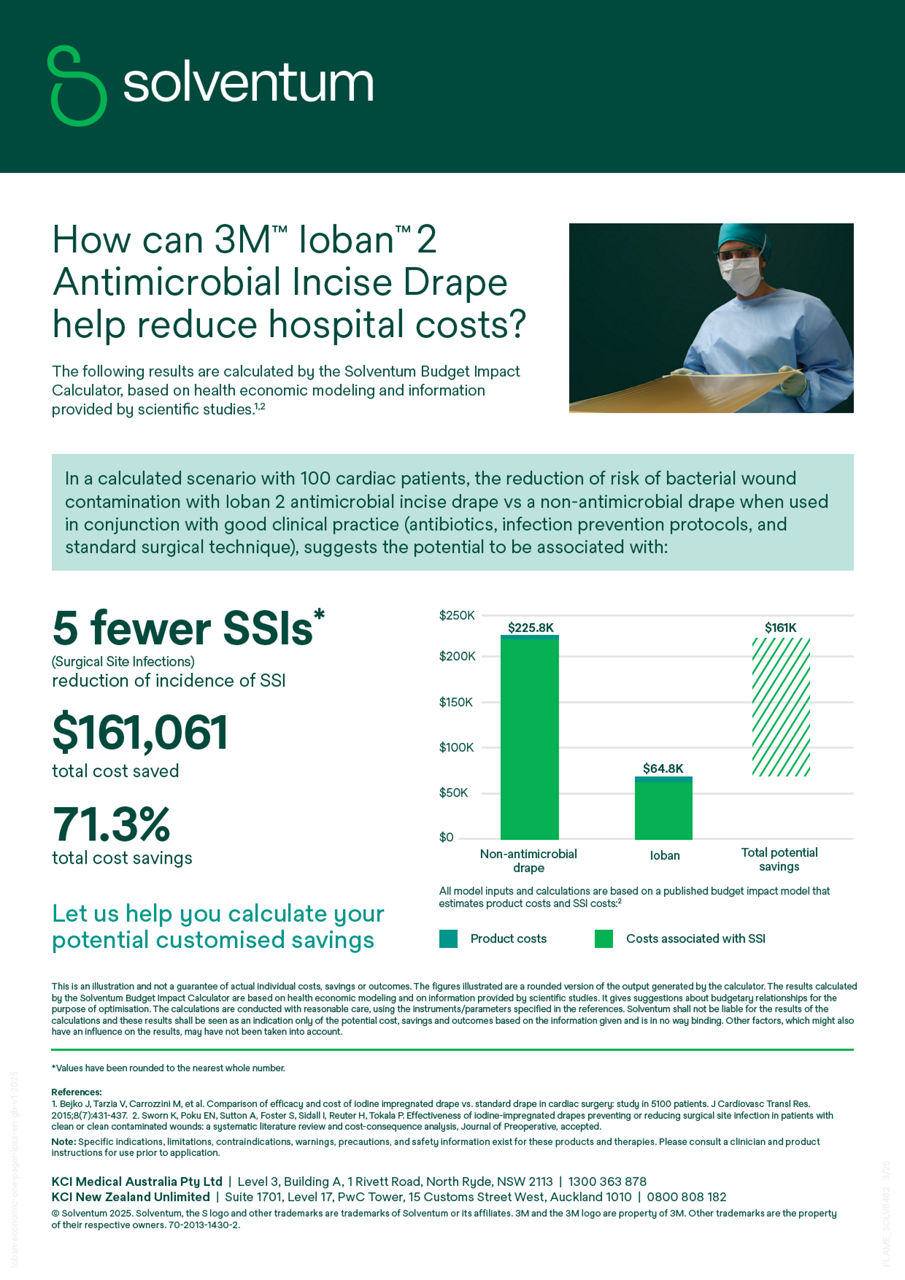
Every patient undergoing surgery faces the risk of contracting a surgical site infection (SSI), primarily due to their skin.1,2 The skin can contain over 1 million bacteria per square centimeter.3 Unfortunately, SSIs not only affect a patient’s quality of life but also create stress for patients and their families. Additionally, they place a significant operational and financial burden on healthcare systems and professionals.

The true toll of SSIs


Antimicrobial incise drapes: Create a sterile surface
Backed by 40 years of strong clinical evidence
Prevent possible wound contamination with incise drapes. Incise drapes create a powerful physical barrier to prevent objects like instruments, gloves and sponges from contacting the patient’s skin, reducing the risk of contamination that could cause a costly and potentially devastating SSI.
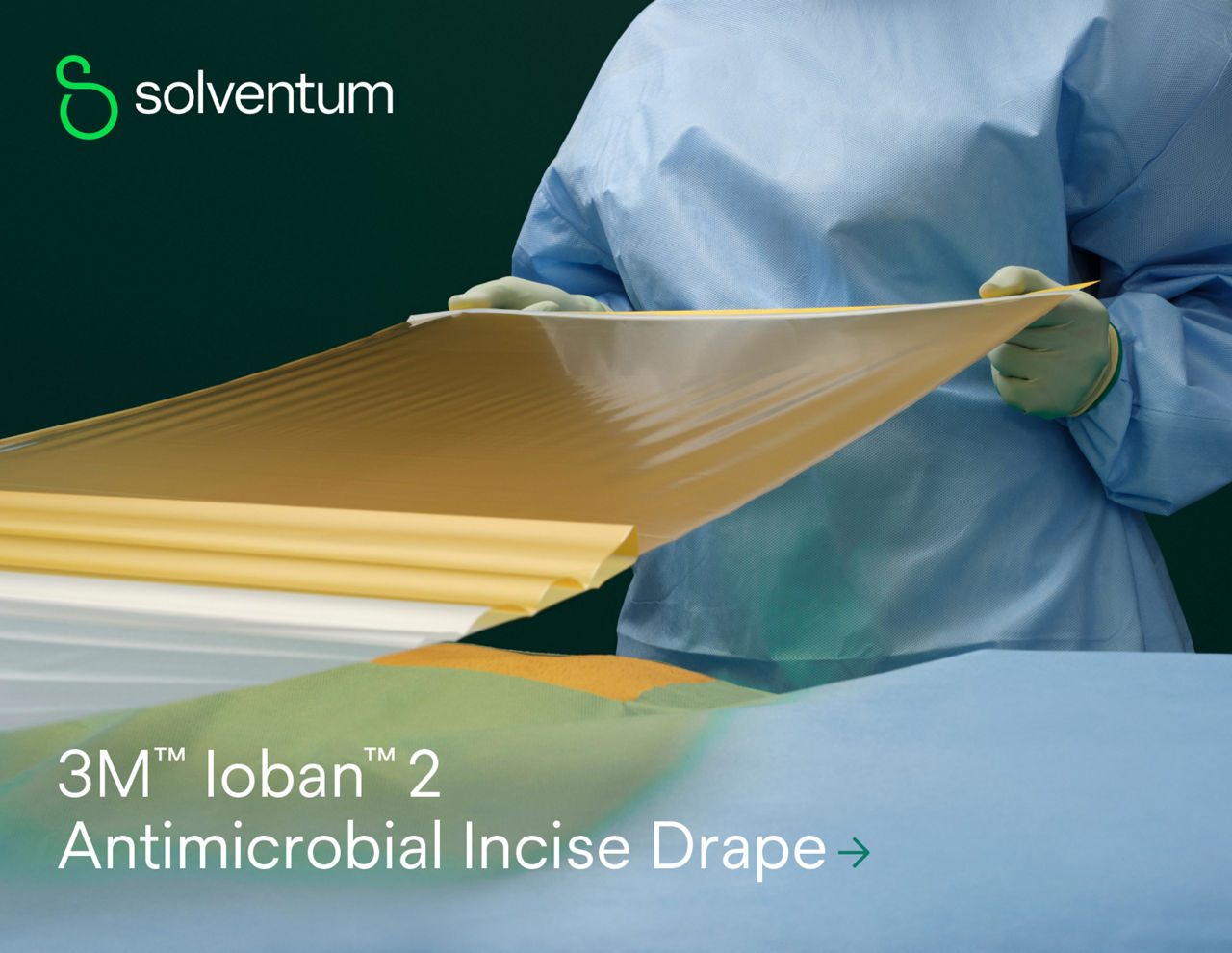
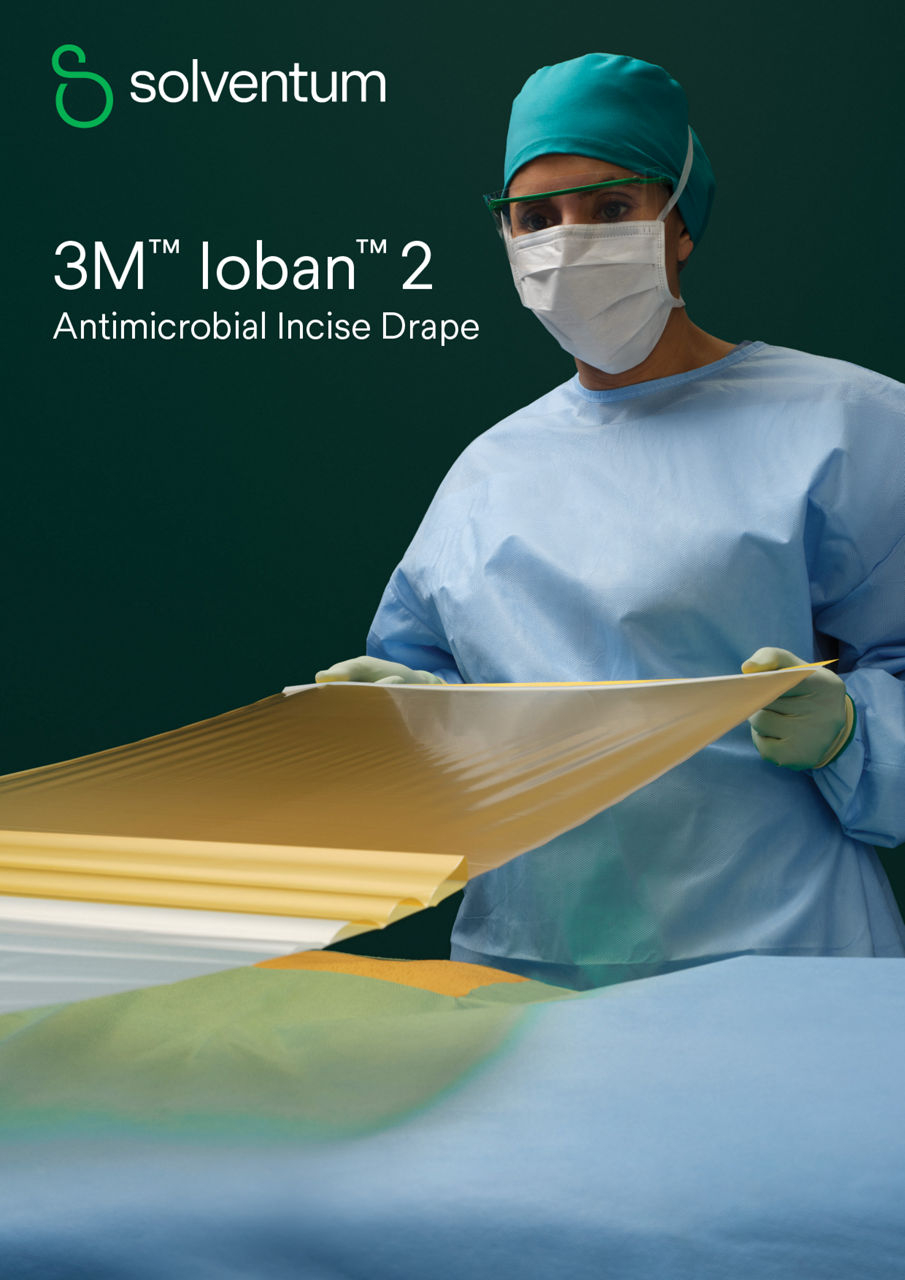
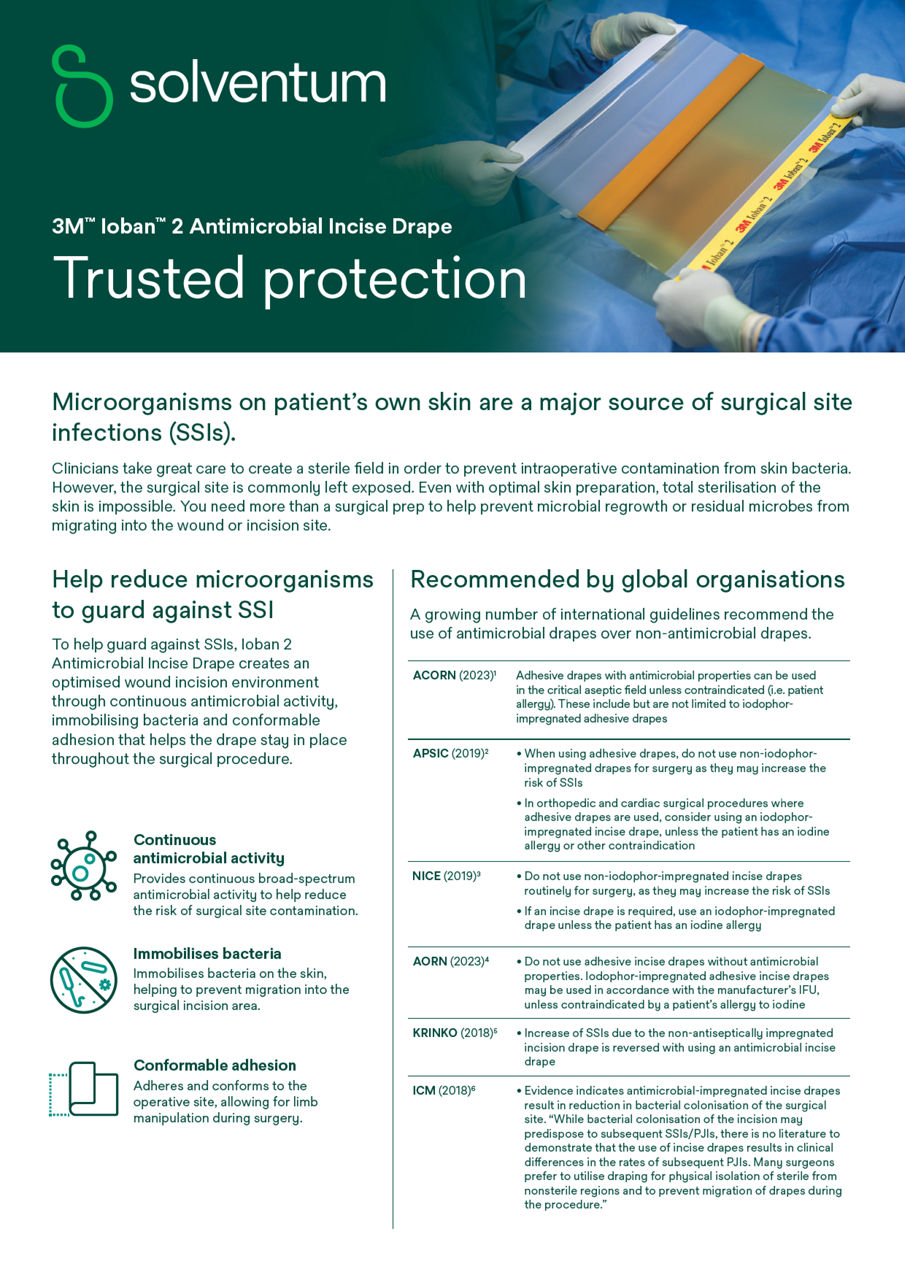
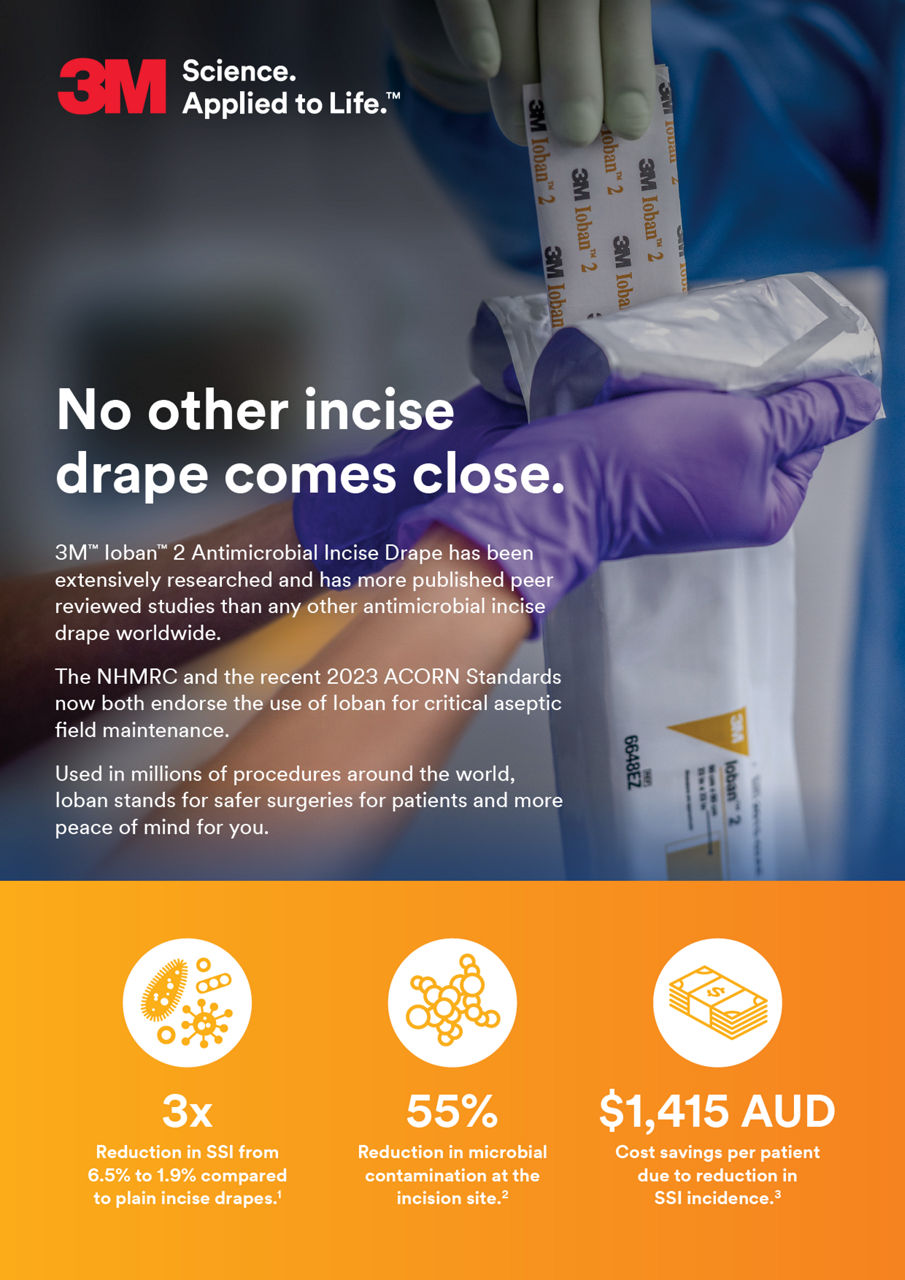
During surgery, you need a trusted solution to help prevent microbial regrowth or residual microbes from migrating into the wound or incision site. Guard against SSIs with 3M™ Ioban™ 2 Antimicrobial Incise Drape. Our drapes reduce the risk of surgical site contamination which can lead to SSIs and other complications so that you can protect the surgical site and deliver compassionate care.
What makes our antimicrobial incise drape different


Global guidelines recommend antimicrobial incise drapes
A growing number of international guidelines recommend the use of antimicrobial drapes over non-antimicrobial drapes. In fact, guidelines are shifting to distinguish between the benefits of antimicrobial and non-antimicrobial incise drapes.

ACORN (2023)8
Adhesive drapes with antimicrobial properties can be used in the critical aseptic field unless contraindicated (i.e. patient allergy). These include but are not limited to iodophor-impregnated adhesive drapes.
NHMRC (2019)9
If an incise drape is required, use an iodophor-impregnated drape unless the patient has an iodine allergy. Do not use non-iodophor-impregnated incise drapes routinely for surgery as they may increase the risk of surgical-site infection.
Ensure skin preparation is dry before draping the patient.
AORN (2023)10
Do not use adhesive incise drapes without antimicrobial properties. Iodophor-impregnated adhesive incise drapes may be used in accordance with the manufacturer’s IFU, unless contraindicated by a patient’s allergy to iodine.
Support your surgical protocol with our solutions
We’re dedicated to making your patient’s surgical journey safer and easier. Explore our broad portfolio of evidence-based antimicrobial incise and specialty fabric drapes designed to help protect patients and staff while helping to deliver optimal outcomes — every patient, every time.


The proof is in the science
Surgeons all over the world rely on 3M™ Steri-Drape™ Surgical Drapes to help support infection prevention in their operating rooms. Our single-use surgical drapes, made with innovative technologies and advanced materials, deliver exceptional performance and offer reliable infection prevention.
Types of surgical drapes:


Ioban resources:
Additional resources:

Contact a Solventum representative
We're here to help! Our team of representatives can provide you with information and resources to help you. Submit the form below to speak with a Solventum representative to learn more about your options.
Reference
- Reichman DE, Greenberg JA. Reducing surgical site infections: a review. Rev Obstet Gynecol. 2009;2:212–21.
- Cheadle WG. Risk factors for surgical site infection. Surg Infect (Larchmt). 2006;7 Suppl 1:S7–11.
- Percival SL, Emanuel C, Cutting KF, Williams DW. Microbiology of the skin and the role of biofilms in infection. Int Wound J. 2012;9:14–32.
- Anderson DJ, Podgorny K, Berrios-Torres SI, et al. Strategies to prevent surgical site infections in acute care hospitals: 2014 Update. Infect Control Hosp Epidemiol. 2014;35(6):605–27.
- Royle R, Gillespie BM, Chaboyer W, Byrnes J, Nghiem S. The burden of surgical site infections in Australia: A cost-of-illness study. J Infect Public Health. 2023 May;16(5):792-798. doi: 10.1016/j.jiph.2023.03.018. Epub 2023
- Zimlichman E, Henderson D, Tamir O, et al. Health care-associated infections: A meta-analysis of costs and financial impact on the U.S. health care system. JAMA Intern Med. 2013;173:2039-46.
- Casey AL, Karpanen TJ, Nightingale P, Elliott TSJ. Antimicrobial activity and skin permeation of iodine present in an iodine-impregnated surgical incise drape. J. Antimicrobial Chemotherapy. 2015.
- Australian College of Perioperative Nurses Ltd (ACORN) The New ACORN Standards. Volume-1-2023 Standards for safe and Quality Care in the Perioperative Environment (SSQCPE) for Individuals. Asepsis Standard, Critical Aseptic Field Maintenance. Australian College of Perioperative Nurses Ltd (ACORN) The New ACORN Standards. Volume-3-2023 Standards for safe and Quality Care in the Perioperative Environment (SSQCPE) for Organisations. Adelaide, South Australia: ACORN; 2023. Asepsis Standard, Critical Aseptic Field Maintenance.
- NHMRC National Health and Medical Research Council guidelines for the prevention and control of infection in healthcare. 2019.
- Cowperthwaite L. AORN Guidelines for Perioperative Practice 2022. Denver, CO: Association for Perioperative Registered Nurses, 2022.