溫度管理


$66 手術室每分鐘的平均成本16 | $203 單位血液的平均獲得成本19 | $25k 手術部位感染的平均成本21 | $14.67 每位手術病人的棉毯平均成本23,24 | $1,629 住院一天的平均成本26 | $10 麻醉後恢復室每分鐘的平均成本27 |
|
|
|
|
|
|
預熱:預防低溫症的關鍵
溫度的幾度差異可以有助於維持體溫正常。任何接受全身或局部麻醉的病人都有可能在手術期間發生低體溫,因為他們的體溫調節機制會受到影響。在麻醉誘導前進行短時間的預熱可以幫助減少手術中的熱量損失。3

麻醉對患者核心體溫的影響
麻醉初期的首60分鐘,研究顯示,未經加熱的手術病人的核心體溫可降低高達1.6°C,4,因為麻醉引起的血管擴張使得體內較溫暖的血液自核心流向較冷的外圍。

在正常情況下,人體會在非常嚴格的範圍內控制其體溫,其核心溫度比周邊高出2°–4°C。這種核心與周邊之間的溫度梯度是由正常的體溫調節性血管收縮造成的。

麻醉會導致血管擴張,使得較熱的血液可以自核心自由流動並與來自較冷外圍的血液混合。當血液循環時,它會逐漸冷卻,直到返回心臟,導致核心體溫下降。這種體溫下降被稱為重新分布體溫下降(RTD)。

使用強制空氣加熱預暖可以提高體外周組織的溫度,限制核心部位通過RTD散失的熱量。溫暖的外周可以限制血液冷卻的速度,並讓血液以更高的溫度回流到核心部位。
預熱的主要好處
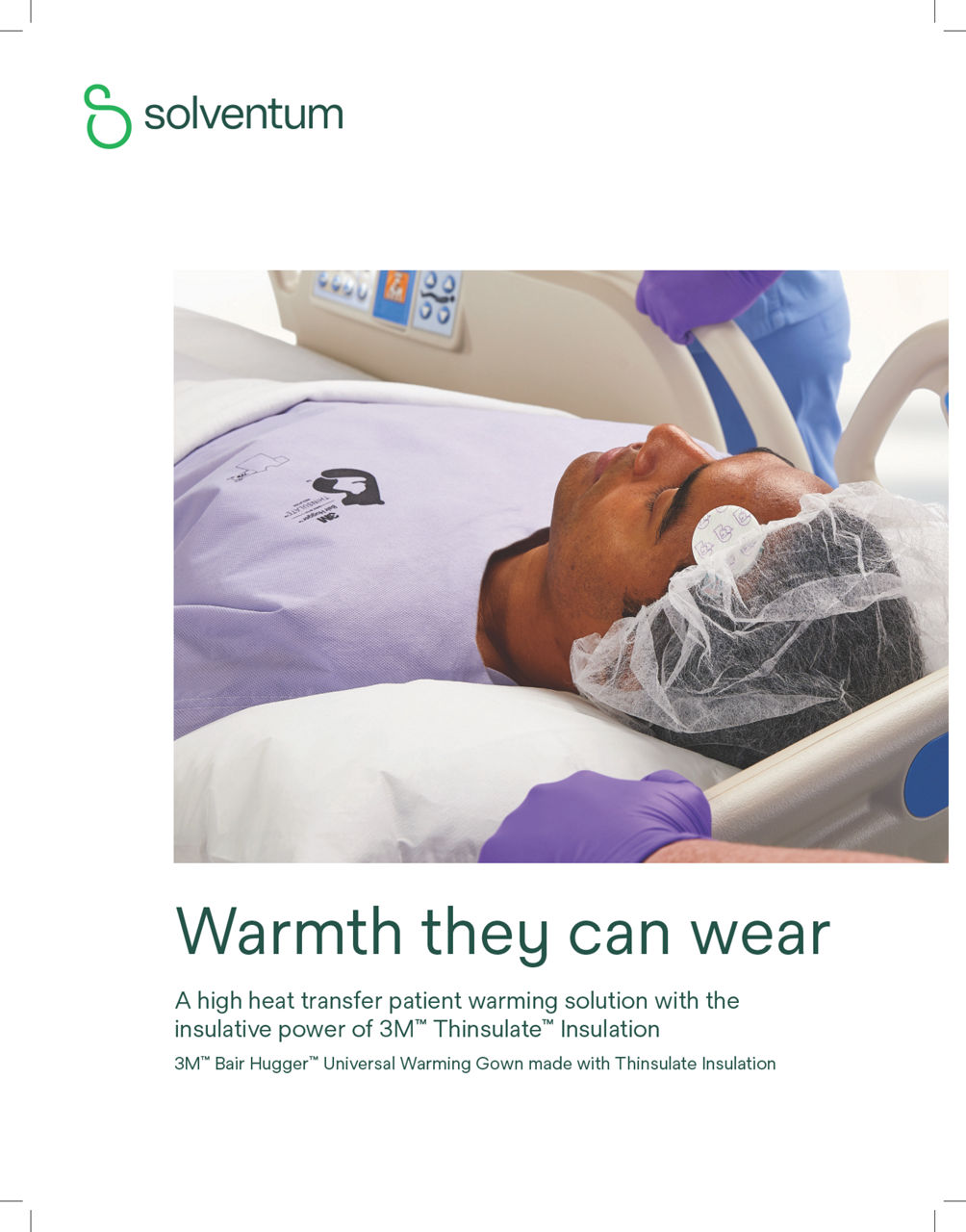
使用3M™ Bair Hugger™ 熱空氣式保溫毯或保溫袍進行預熱可以幫助:
- 通過減少核心至周邊溫度梯度來減少核心溫度下降
- 與手術中加溫配合,維持正常體溫,可降低多種併發症(包括手術部位感染(SSIs))的發病率5,6
- 在麻醉誘導前積極給患者的周邊部位加溫,儲存熱量以幫助抵禦由於RTD造成的熱量損失
- 提高患者滿意度
維持正常體溫可以幫助降低風險
維持正常的核心體溫,即恆溫,是病人安全的重要組成部分。核心體溫偏離正常範圍可能對所有接受手術的病人構成風險,並且與增加手術併發症的風險有關,包括:


提升成果,降低成本
幫助病人維持正常的核心體溫對於改善手術結果以及減少或消除與低溫症相關的併發症所帶來的成本至關重要。
Bair Hugger 加熱系統有助於維持體溫常態,這可以減少與低溫症相關的併發症風險。
$66 手術室每分鐘平均成本16 | $203 血液單位平均取得成本19 | $25k 手術部位感染的平均成本21 | $14.67 每位手術病人的棉毯平均成本23,24 | $1,629 住院病人每日平均成本26 | $10 麻醉後恢復室每分鐘平均成本27 |
|
|
|
|
|
|
保持有效的溫度管理方案
幫助您維持正常體溫
我們希望幫助您改善病患的生活。因此,我們仔細聆聽以了解您面臨的最大挑戰,然後尋找創新的溫度管理解決方案,以便您能提供更有效的護理。
這就是為什麼我們設計了一系列的解決方案,包括3M™ Bair Hugger溫度監測系統、3M™ Bair Hugger保溫系統、3M™ Ranger血液/液體和灌溉液保溫系統以及輸液加壓器,旨在幫助您維持正常體溫,創造積極的病患體驗並改善手術結果。


參考資料:
- Forstot RM. The etiology and management of inadvertent perioperative hypothermia. J Clin Anesth. 1995;7:657-674.
- Leslie K, Sessler DI. Perioperative hypothermia in the high-risk surgical patient. Best Pract Res Clin Anaesthesiol. 2003;17:485-498.
- Horn EP, Bein B, Bohm R, Steinfath M, Sahili N, Hocker J. The effect of short time periods of pre-operative warming in the prevention of peri-operative hypothermia. Anaesth. 2012;67(6)
- Hooven K. Preprocedure warming maintains normothermia throughout the perioperative period: a quality improvement project. JoPAN. 2011;26910:9-14
- Kurz A, Sessler DI, et al. Perioperative Normothermia to Reduce the Incidence of Surgical-Wound Infection and Shorten Hospitalization. New Engl J Med. 1996;334:1209-1215.
- Melling AC, Ali B, Scott EM, Leaper DJ. Effects of preoperative warming on the incidence of wound infection after a clean surgery: a randomized controlled trial. Lancet. 2001;358(9285):876-880.
- Schmied H, Kurz A, et al. Mild hypothermia increases blood loss and transfusion requirements during total hip arthroplasty. The Lancet. 1996;347(8997):289-292.
- Rajagopalan S, et al. The Effects of Mild Perioperative Hypothermia on Blood Loss and Transfusion Requirement. Anesth. 2008; 108:71-7.
- Bush H Jr., Hydo J, Fischer E, et al. Hypothermia during elective abdominal aortic aneurysm repair: The high price of avoidable morbidity. J Vasc Surg. 1995;21(3): 392-402.
- Frank SM, Fleisher LA, Breslow MJ, et al. Perioperative maintenance of normothermia reduces the incidence of morbid cardiac events. JAMA. 1997;277:1127-1134.
- Scott, Andrew V., J. L. Stonemetz, J. O. Wasey, D. J. Johnson, R. J. Rivers, C. G. Koch, et al. “Compliance with Surgical Care Improvement Project for Body Temperature Management (SCIP Inf-10) Is Associated with Improved Clinical Outcomes.” Anesthesiology 123, no. 1 (2015): 116–125.
- Fossum S, Hays J, Henson MM. A Comparison Study on the Effects of Prewarming Patients in the Outpatient Surgery Setting. J PeriAnesth Nurs. 2001;16(3):187-194.
- Wilson L, Kolcaba K. Practical Application of Comfort Theory in the Perianesthesia Setting. J PeriAnesth Nurs. 2004;19(3):164-173.
- Schroeck H, Lyden AK, Benedict WL, Ramachandran SK. Time trends and predictors of abnormal postoperative body temperature in infants transported to the intensive care unit. Anesthesiol Res Pract. 2016;7318137. doi:10.1155/2016/7318137.
- Hooper VD, Chard R, Clifford T, et al. ASPAN’s evidence-based clinical practice guideline for the promotion of perioperative normothermia: Second edition. J Perianesth Nurs. 2010;25(6):346-365. doi:10.1016/j.jopan.2010.10.006.
- Shippert, Roxanne. “Cost Containment in the Operating Room.” American Journal of Cosmetic Surgery 22, no. 1 (2005): 25–34.
- Yilmaz, M., et al. “Anesth.” Anesthesiology 109 (2008): Abstract 880.
- Andrzejowski, J. et. al. BJA. 2008;101(5):627-631.
- Shander, A. et. al. Transfusion. 2010;50:753-765.
- Mahoney, C. B., and J. Odom. “AANA J.” AANA Journal 67, no. 2 (1999): 155–164.
- Stone, P. AJIC. 2005;33(9):501- 509.
- Kurz, Andrea, Daniel I. Sessler, and Reinhard Lenhardt. “Perioperative Normothermia to Reduce the Incidence of Surgical-Wound Infection and Shorten Hospitalization. Study of Wound Infection and Temperature Group.” New England Journal of Medicine 334, no. 19 (1996): 1209–1215.
- VPMR. "Warming Methods Cost Comparison Research." Survey results sponsored by 3M, July 2012.
- The Key Group. "Hospital Linen Usage and Cost Analysis Survey." Survey results sponsored by 3M, November 2011.
- Senn, Girard F. “Surg Serv Management.” Surgical Services Management 8 (2002): 19–25.
- Oh, J. “ASC Communications.” ASC Communications, April 30, 2012. Source: Kaiser State Health Facts.
- Steinriede, K. “Outpatient Surg.” Outpatient Surgery, October 2010.